A <a rel="nofollow" target="_blank" href="http://www.nps.gov/yose/planyourvisit/hdpermits.htm">permit is required</a> to rxh to Half Dome seven days per week when the cables are up. For day hikers, permits are available by lottery in March, plus a limited number available by daily lotteries two days in advance. Backpackers, including those who want to camp in Little Yosemite Valley, should request a Half Dome permit with their wilderness permit.
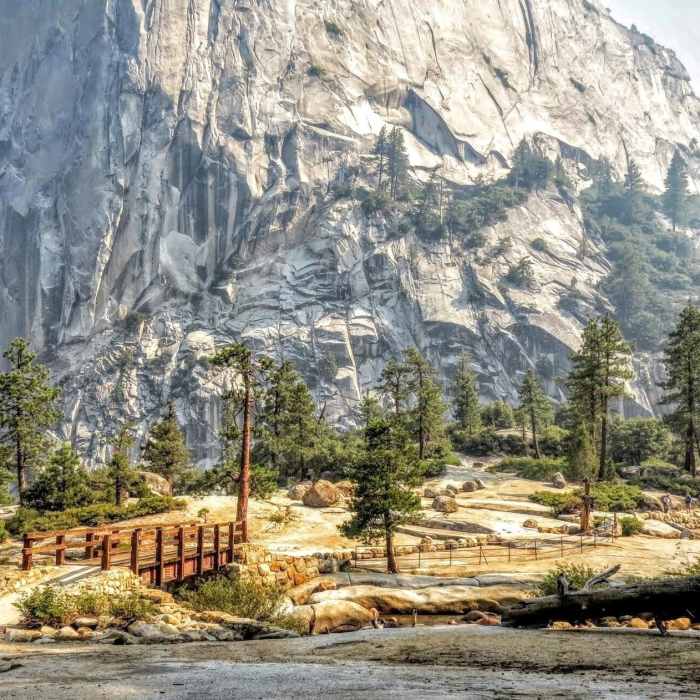
The 14-to-16-mile round-trip hike to Half Dome is not for those who are out of shape or unprepared. You'll be gaining elevation (for a total of 4,800 feet) most of your way to the top of Half Dome. Most would say the reward is worth the effort. Along the way, you'll see outstanding views of Vernal and Nevada Falls, Liberty Cap, Half Dome, and--from the shoulder and summit--panoramic views of Yosemite Valley and the High Sierra. Most people take 10 to 12 hours to hike to Half Dome and back;some take longer. If you plan on hiking during the day, it's smart to leave around sunrise (or earlier) and then have a non-negotiable turn-around time. For instance, if you haven't reached the top of Half Dome by 3:30 pm, you'll turn around. Check for sunrise and sunset times before you hike. Regardless, each person should carry a flashlight or headlamp with good batteries (hikers commonly struggle down the trail after dark because they don't have a flashlight). Most people begin the hike from Happy Isles (shuttle stop #16), which is about a 1/2-mi from the trailhead parking lot or about 3/4-mi past Curry Village (where additional parking is available). Shuttle service doesn't begin until 7 am, so if you're arriving before that, you can hike on the road to the trailhead. Look for signs for either the JMT/Mist Trail to begin your hike. You can either stay on the JMT all the way to Half Dome Trail for a longer but mellower hike (4mi) or follow the Mist Trail (this is the classic route up to Half Dome, ~2.5mi). The Mist Trail offers an up close and personal view of both Vernal and Nevada Falls but is steeper than the JMT. Both the JMT and Mist Trail will eventually intersect at the compost toilets near Nevada Falls -- there will be clear signage indicating the path to continue onto Half Dome. The trail steadily climbs to the north-northwest through the forest for roughly a mile before turning west and then southwest toward Half Dome. You'll eventually emerge from the tree-cover onto solid granite and begin ascending a steep series of switchbacks known as the subdome (before starting the subdome, a ranger will check for your permit, it is a federal offense to even enter the subdome without a permit). The most famous part of this trail is the ascent up the cables. The two metal cables allow hikers to climb the last 400 feet to the summit without rock climbing equipment -- the cables are held up by metal poles drilled into the ground at regular intervals, each pair of poles has a wooden plank attached to assist hikers. It can take 45mins to climb the cables one way -- longer if it's crowded. Since 1919, relatively few people have fallen and died on the cables. However, injuries are not uncommon for those acting irresponsibly. The Half Dome cables usually go back up the Friday before Memorial Day (conditions permitting) and come down the day after Columbus Day/before the start of snow. Tips while using the cables: Take your time and be patient with slower hikers. Allow faster hikers to pass you (when possible). Remain on the inside of the cables. Do not attempt the ascent if: Storm clouds are in the area. The ground is wet (the cables and rock become very slick when wet;most accidents on the cables occur during wet conditions). The cables are down for the winter (typically, from the day after Columbus Day until Memorial Day weekend)