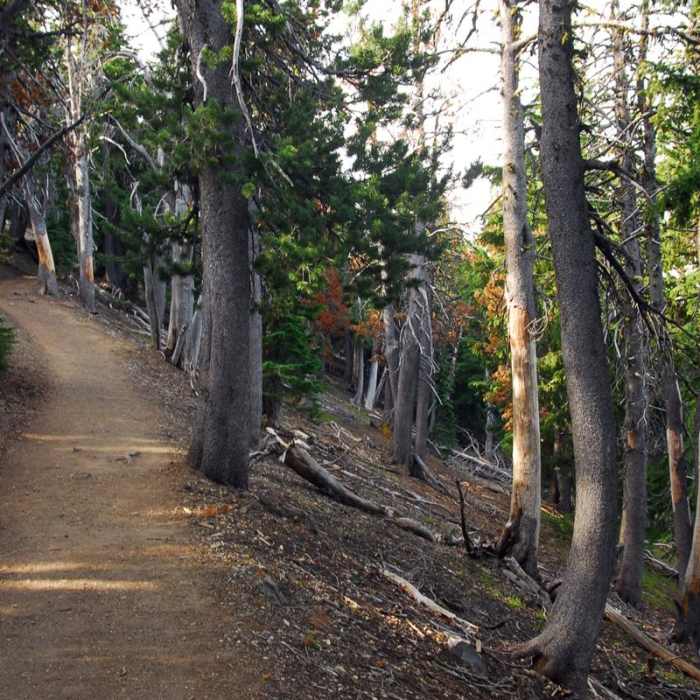
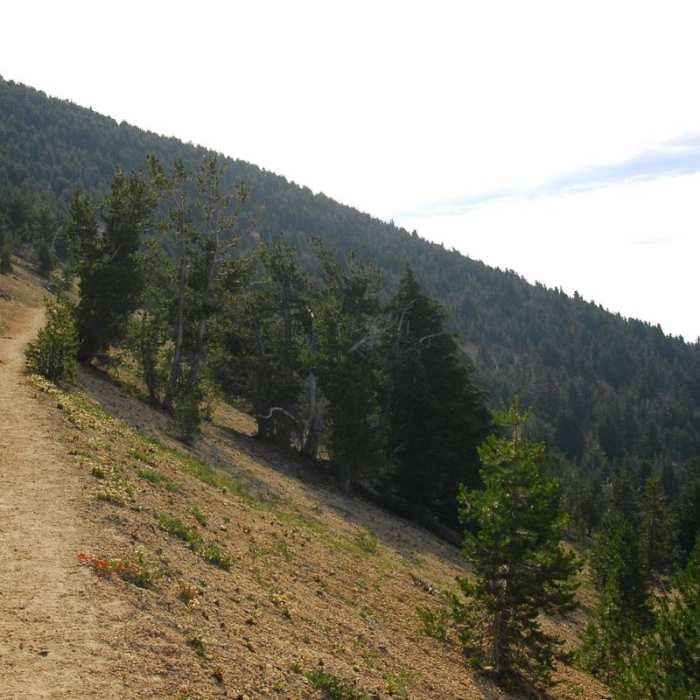
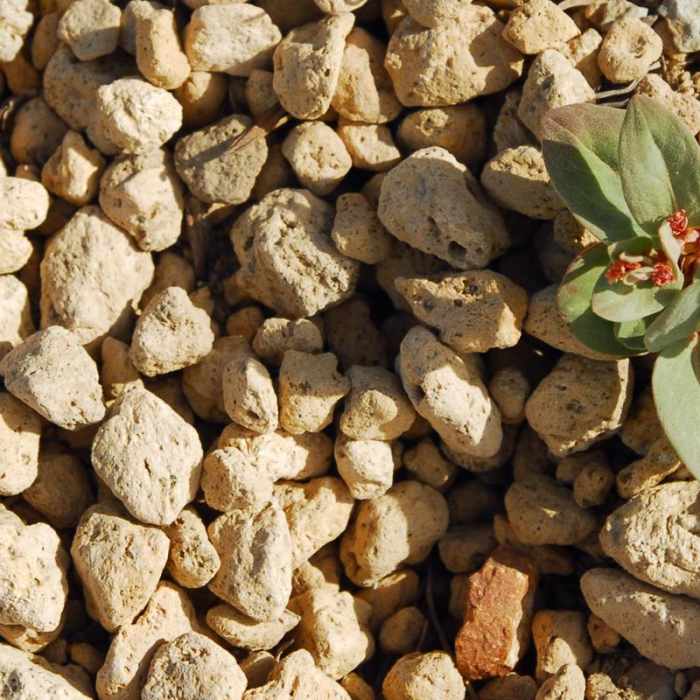
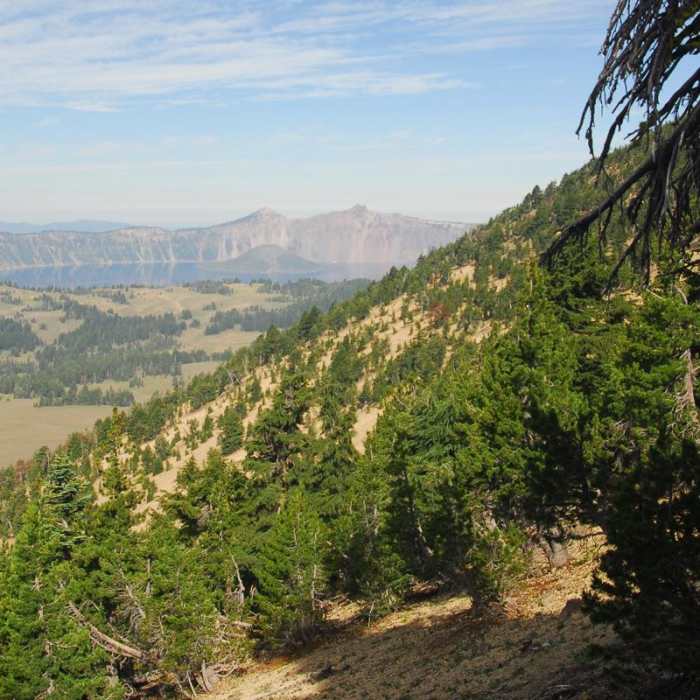
Over 8,000 years ago Mount Scott would have been a relatively small pumice* cone vent on the southeastern flanks of what was then Mount Mazama. Today, since the massive eruption of the 12,000-foot stratovolcano, the 8,929-foot Mount Scott is by far the area's highest peak, and certainly the location with the most sweeping views of Crater Lake National Park. It also stands today as Oregonas 10th highest peak in the Cascade Mountains. Luckily for most visitors, the 1,250-foot climb to the coneas summit is a relatively modest gain for a peak of this stature, and the rewards include some truly spectacular vistas. * Often confused with cinder, particularly in reference to cone vents, pumice is certainly different. Both are debris/solidified rock formations of high-pressure gas-charged magma, making both porous and quite light. In simplified terms, however, pumice is gas-charged obsidian (volcanic matter containing high levels of silica), and cinders are gas-charged basalt (volcanic matter containing higher levels of iron).