Ready to explore this trail?
View Trail Map in AppNo scheduled closures, but trail should not be attempted when snow is on the ground as it will be difficult to find.
Path Type
There and Back
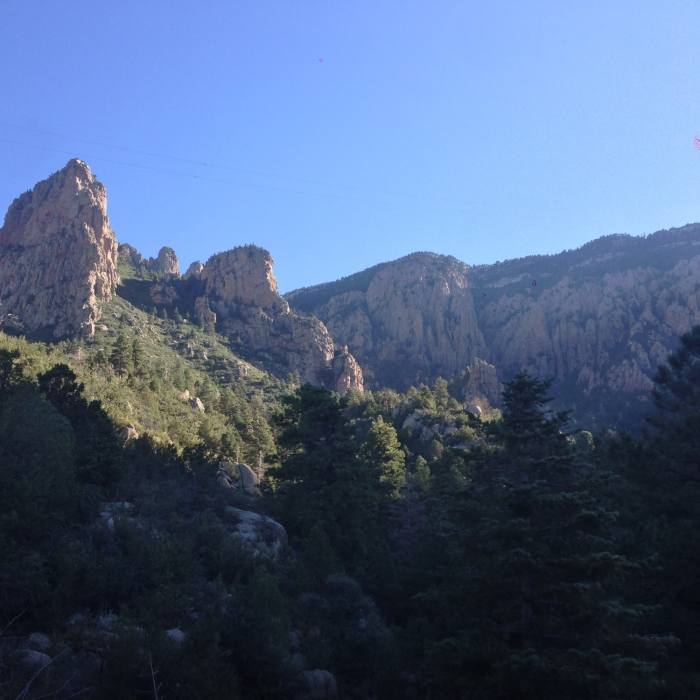
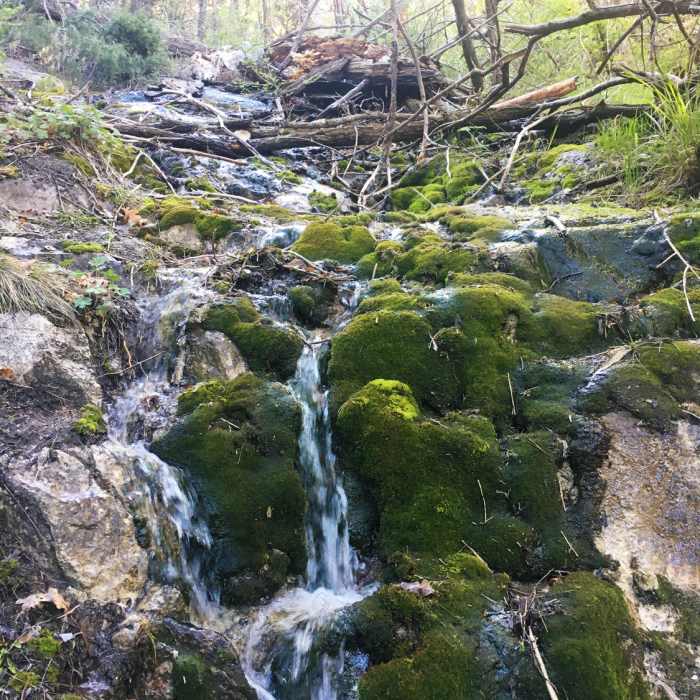
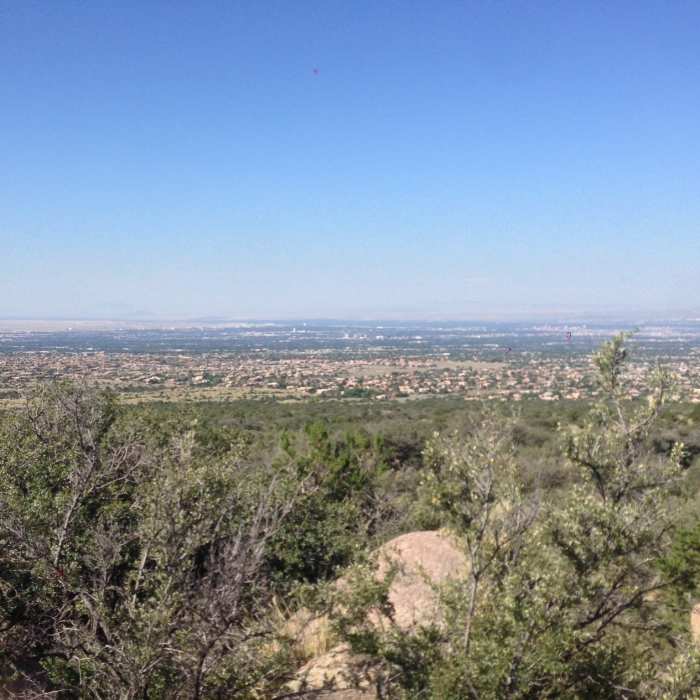
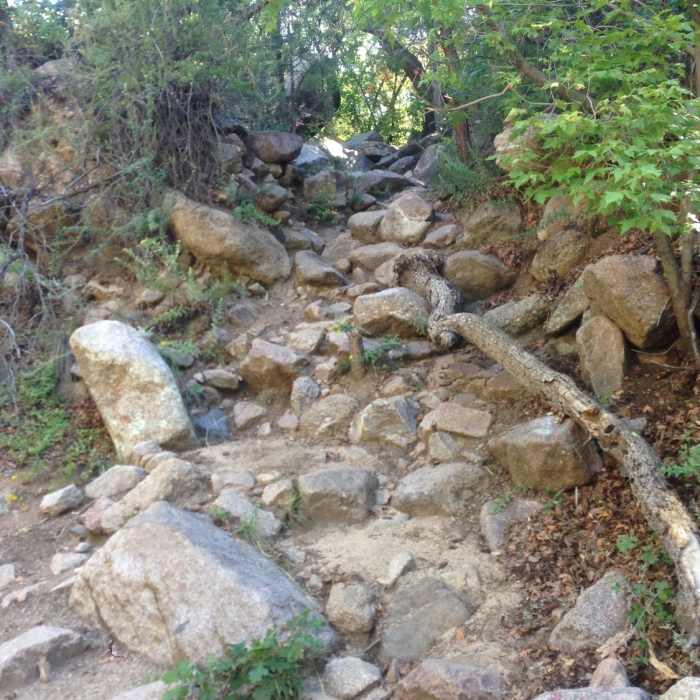
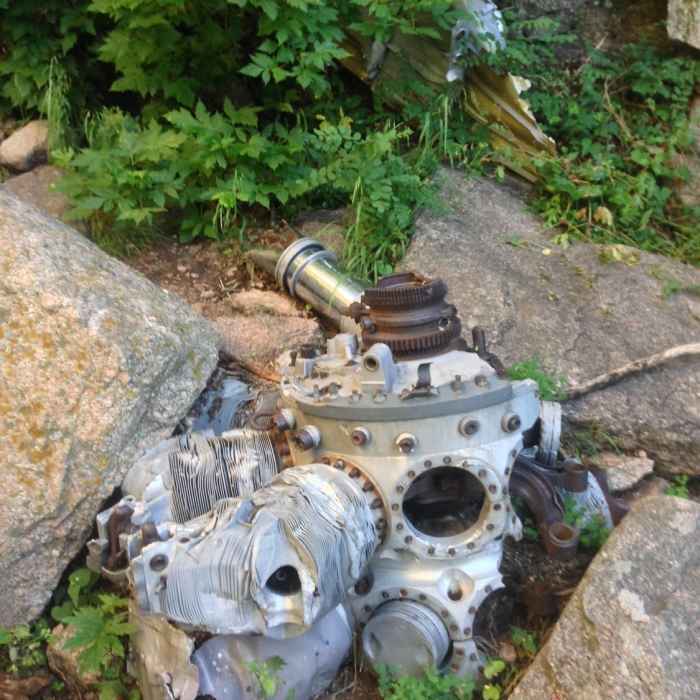
The parking lot just north of the entry station at Elena Gallegos will put you closest to the trailhead. Any combination of the open space trails will work, but EG Trail 230 will take you most directly. The dirt trails here are mostly flat and wide, and you'll occasionally be sharing it with cyclists and other users. Follow it until you see the large sign on your right marking the trailhead.Here, you'll leave behind the flat open space trails (and its accompanying crowd) and begin the climb into Domingo Baca Canyon. Much of the trail will follow creekbeds, which can help with navigation if you get lost -- though it is generally not hard to follow. Roughly a half mile into the trail you'll find the foundation of a shelter. Not long after this the trail will enter into the trees and welcome shade.Soon the trail will move directly alongside the creek bed, occasionally crossing it. At some points, a second trail will parallel the creek, a bit higher up. If you choose to take the higher trail, which is a little wider and more clear of rocks and roots, keep an eye on your GPS for where the trail leaves the creek bed, as it can be difficult to spot and is not well-marked (N 35 10.886' W 106 27.594', also shown on the map here). If you miss the turnoff, you'll eventually come across a dead end canyon.After leaving the creek, the trail begins to climb more steeply, gaining most of its elevation over the remaining mile and a half. After passing through a short sandy area, you'll soon join another creek bed, which you'll stay along most of the way. Watch overhead for the cables of the tramway; the crash site is almost directly beneath it.Shortly before reaching the crash site, you'll come across a large rock formation that you'll need to climb to continue. A well-placed branch has been left there to help out.Continue past the rocks through some dense brush for about a quarter mile to the final resting place of TWA Flight 260. The trail heads directly to the first pieces of debris; part of the fuselage near the cockpit and a large section with the number 416 on the side. A marker has been attached telling the story of the crash. Other pieces of wreckage can be found in the area as well. Please respect the site as the location where sixteen people lost their lives and do not disturb the wreckage.A few individuals have stated that they were able to push through the canyon further and eventually join the La Luz trail near the top by the tramway, but the marked trail ends here and further progression is extremely difficult. In other words, the best choice is to turn here and enjoy the way back. An expansive view of Albuquerque and the valley will open up as you exit the canyon near the foundation you passed on the way up.Should you want to review another thorough description of the trail, which includes some useful waypoints to program into a GPS, you can find it here.
TWA Flight 230 departed Albuquerque for Santa Fe early in the morning on February 19, 1955. As the weather was overcast with very poor visibility, their air traffic control clearance was to proceed via instruments to intercept the localizer at Santa Fe; a procedure that would normally allow them to climb and navigate away from the mountains safely. Sadly, it was later discovered that a malfunction in the instruments led the pilots to believe they were flying away from the Sandias when they were, in fact, pointed directly at them. By the time their error was discovered, it was too late, and sixteen people met their tragic end only a few minutes into the flight.Additional information is available in this well-written Wikipedia article on the crash.
No Condition Reports
Sandia Crest to Sandia Peak Tramway Trail
Sandia Crest to Sandia Peak Tramway Trail
10K Crest Trail Loop
10K Crest Trail Loop
North 10k Trail and Osha Loop Trail
North 10k Trail and Osha Loop Trail
La Luz Trail
La Luz Trail
Embudo Canyon
Embudo Canyon
Whitewash Loop
Whitewash Loop
Contributors